
Bread, boston brown, canned nutrition: calories, carbs, GI, protein, fiber, fats
*all the values are displayed for the amount of 100 grams
Top nutrition facts for Bread, boston brown, canned
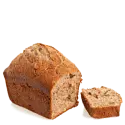
| Calories ⓘ Calories for selected serving | 195 kcal |
| Glycemic load ⓘ Glycemic Load (GL) is a metric that measures both the quality (Glycemic Index) and quantity of carbohydrates in a specific serving of food to estimate its impact on blood sugar levels. It is calculated as: (GI × Carbs in grams) / 100. | 0 (low) |
| Net carbs ⓘ Net Carbs = Total Carbohydrates – Fiber – Sugar Alcohols | 39 g |
| Acidity (Based on PRAL) ⓘ PRAL (Potential renal acid load) is calculated using a formula. On the PRAL scale the higher the positive value, the more is the acidifying effect on the body. The lower the negative value, the higher the alkalinity of the food. 0 is neutral. | -2.5 (alkaline) |
Bread, boston brown, canned calories (kcal)
| Calories for different serving sizes of bread, boston brown, canned | Calories | Weight |
|---|---|---|
| Calories in 100 grams | 195 | |
| Calories in 1 oz | 55 | 28.35 g |
| Calories in 1 slice | 88 | 45 g |
Extra Nutrition facts for Bread, boston brown, canned
| Protein per 100 calories ⓘ Shows how many grams of protein you get from 100 calories of this food, calculated as (protein in g ÷ calories) × 100. | 2.7 g |
| Calories per 10 g protein ⓘ Shows how many calories you need to eat from this food to get 10 g of protein, calculated as (calories ÷ protein in g) × 10. | 375 kcal |
| Weight per 100 calories ⓘ Shows how many grams of this food equal 100 kcal—higher grams mean a larger portion for the same calories. | 51 g |
Mineral coverage chart
Mineral chart - relative view
Vitamin coverage chart
Vitamin A:
75µg of 900µg
8.3%
Vitamin E:
0.96mg of 15mg
6.4%
Vitamin D:
0µg of 20µg
0%
Vitamin C:
0mg of 90mg
0%
Vitamin B1:
0.04mg of 1mg
3.5%
Vitamin B2:
0.35mg of 1mg
27%
Vitamin B3:
3.4mg of 16mg
21%
Vitamin B5:
1.7mg of 5mg
34%
Vitamin B6:
0.25mg of 1mg
19%
Folate:
33µg of 400µg
8.3%
Vitamin B12:
0.03µg of 2µg
1.3%
Vitamin K:
7.5µg of 120µg
6.3%
Vitamin chart - relative view
Macronutrients chart
Protein:
Daily Value: 10%
5.2 g of 50 g
5.2 g (10% of DV )
Fats:
Daily Value: 2%
1.5 g of 65 g
1.5 g (2% of DV )
Carbs:
Daily Value: 14%
43.3 g of 300 g
43.3 g (14% of DV )
Water:
Daily Value: 2%
47.2 g of 2,000 g
47.2 g (2% of DV )
Other:
2.8 g
2.8 g
Protein quality breakdown
Tryptophan:
219mg of 280mg
78%
Threonine:
486mg of 1,050mg
46%
Isoleucine:
558mg of 1,400mg
40%
Leucine:
1050mg of 2,730mg
38%
Lysine:
468mg of 2,100mg
22%
Methionine:
276mg of 1,050mg
26%
Phenylalanine:
699mg of 1,750mg
40%
Valine:
699mg of 1,820mg
38%
Histidine:
384mg of 700mg
55%
Fat type information
Saturated fat:
0.28 g
Monounsaturated fat:
0.21 g
Polyunsaturated fat:
0.56 g
Fiber content ratio for Bread, boston brown, canned
Sugar:
2.4 g
Fiber:
4.7 g
Other:
36 g
All nutrients for Bread, boston brown, canned per 100g
| Nutrient | Value | DV% | In TOP % of foods | Comparison |
| Vitamin A | 25µg | 3% | 24% | |
| Calories | 195kcal | 10% | 50% |
4.1 times more than Orange
|
| Protein | 5.2g | 12% | 61% |
1.8 times more than Broccoli
|
| Protein per 100 calories | 2.7g | N/A | 64% | |
| Calories per 10 g protein | 375kcal | N/A | 33% | |
| Weight per 100 calories | 51g | N/A | 51% | |
| Fats | 1.5g | 2% | 71% |
22.2 times less than Cheese
|
| Vitamin C | 0mg | 0% | 100% |
N/A
|
| Carbs | 43g | 14% | 24% |
1.5 times more than Rice
|
| Net carbs | 39g | N/A | 23% |
1.4 times less than Chocolate
|
| Cholesterol | 1mg | 0% | 54% |
373 times less than Egg
|
| Vitamin D* | 0 IU | 0% | 100% |
N/A
|
| Vitamin D | 0µg | 0% | 100% |
N/A
|
| Magnesium | 63mg | 15% | 11% |
2.2 times less than Almonds
|
| Calcium | 70mg | 7% | 24% |
1.8 times less than Milk
|
| Potassium | 318mg | 9% | 28% |
2.2 times more than Cucumber
|
| Iron | 2.1mg | 26% | 34% |
1.2 times less than Beef broiled
|
| Sugar | 2.4g | N/A | 37% |
3.7 times less than Coca-Cola
|
| Fiber | 4.7g | 19% | 13% |
2 times more than Orange
|
| Copper | 0.08mg | 9% | 49% |
1.8 times less than Shiitake
|
| Zinc | 0.5mg | 5% | 62% |
12.6 times less than Beef broiled
|
| Phosphorus | 112mg | 16% | 55% |
1.6 times less than Chicken meat
|
| Sodium | 631mg | 27% | 14% |
1.3 times more than White bread
|
| Vitamin E | 0.32mg | 2% | 33% |
4.6 times less than Kiwi
|
| Manganese | 1mg | 44% | 8% | |
| Selenium | 22µg | 40% | 24% | |
| Vitamin B1 | 0.01mg | 1% | 84% |
19 times less than Pea raw
|
| Vitamin B2 | 0.12mg | 9% | 59% |
1.1 times less than Avocado
|
| Vitamin B3 | 1.1mg | 7% | 60% |
8.5 times less than Turkey meat
|
| Vitamin B5 | 0.57mg | 11% | 29% |
2 times less than Sunflower seeds
|
| Vitamin B6 | 0.08mg | 6% | 59% |
1.5 times less than Oats
|
| Vitamin B12 | 0.01µg | 0% | 53% |
70 times less than Pork
|
| Vitamin K | 2.5µg | 2% | 22% |
40.6 times less than Broccoli
|
| Folate | 11µg | 3% | 45% |
5.5 times less than Brussels sprouts
|
| Choline | 24mg | 4% | 28% | |
| Saturated fat | 0.28g | 1% | 71% |
20.9 times less than Beef broiled
|
| Monounsaturated fat | 0.21g | N/A | 70% |
47.3 times less than Avocado
|
| Polyunsaturated fat | 0.56g | N/A | 52% |
83.6 times less than Walnut
|
| Tryptophan | 0.07mg | 0% | 41% |
4.2 times less than Chicken meat
|
| Threonine | 0.16mg | 0% | 44% |
4.4 times less than Beef broiled
|
| Isoleucine | 0.19mg | 0% | 45% |
4.9 times less than Salmon raw
|
| Leucine | 0.35mg | 0% | 45% |
6.9 times less than Tuna Bluefin
|
| Lysine | 0.16mg | 0% | 47% |
2.9 times less than Tofu
|
| Methionine | 0.09mg | 0% | 43% |
Equal to Quinoa
|
| Phenylalanine | 0.23mg | 0% | 44% |
2.9 times less than Egg
|
| Valine | 0.23mg | 0% | 45% |
8.7 times less than Soybean raw
|
| Histidine | 0.13mg | 0% | 43% |
5.9 times less than Turkey meat
|
| Caffeine | 0mg | 0% | 100% | |
| Omega-3 (EPA) | 0g | N/A | 100% |
N/A
|
| Omega-3 (DHA) | 0g | N/A | 100% |
N/A
|
| Omega-3 (DPA) | 0g | N/A | 100% |
N/A
|
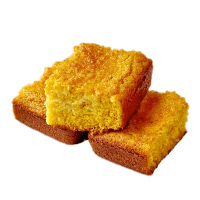
Check out similar food or compare with current

NUTRITION FACTS LABEL
Nutrition Facts
___servings per container
Serving Size ______________
Serving Size ______________
Amount Per 100g
Calories 195
% Daily Value*
2.3%
Total Fat
1.5g
1.3%
Saturated Fat 0.28g
0
Trans Fat
0g
0.33%
Cholesterol 1mg
27%
Sodium 631mg
14%
Total Carbohydrate
43g
19%
Dietary Fiber
4.7g
Total Sugars 0g
Includes ? g Added Sugars
Protein
5.2g
Vitamin D
0mcg
0
Calcium
70mg
7%
Iron
2.1mg
26%
Potassium
318mg
9.4%
*
The % Daily Value (DV) tells you how much a nutrient in a serving of food contributes to a daily diet. 2,000 calories a day is used for general nutrition advice.
Health checks
ⓘ
Dietary cholesterol is not associated with an increased risk of coronary heart disease in healthy individuals. However, dietary cholesterol is common in foods that are high in harmful saturated fats.
Source
Low in Cholesterol

ⓘ
Trans fat consumption increases the risk of cardiovascular disease and mortality by negatively affecting blood lipid levels.
Source
No Trans Fats
ⓘ
Saturated fat intake can raise total cholesterol and LDL (low-density lipoprotein) levels, leading to an increased risk of atherosclerosis. Dietary guidelines recommend limiting saturated fats to under 10% of calories a day.
Source
Low in Saturated Fats
ⓘ
While the consumption of moderate amounts of added sugars is not detrimental to health, an excessive intake can increase the risk of obesity, and therefore, diabetes.
Source
Low in Sugars
References
All the values for which the sources are not specified explicitly are taken from FDA’s Food Central. The exact link to the food presented on this page can be found below.